

Which Telescope Can See Nebula With Direct Camera
Getting started in astrophotography is like shooting fish in a barrel for the curious and enthusiastic astronomers. With the right practice and tools, you tin can showtime to capture some of the deep space objects that inspire you and produce your ain breathtaking images of the universe!
This essential astrophotography checklist for beginners will guide you through everything you need to photograph deep space objects like the Horsehead Nebula or Orion Nebula .
Read on to find out more about the tools yous need to go an astrophotographer!
5 Things You Need to Photo Nebulae
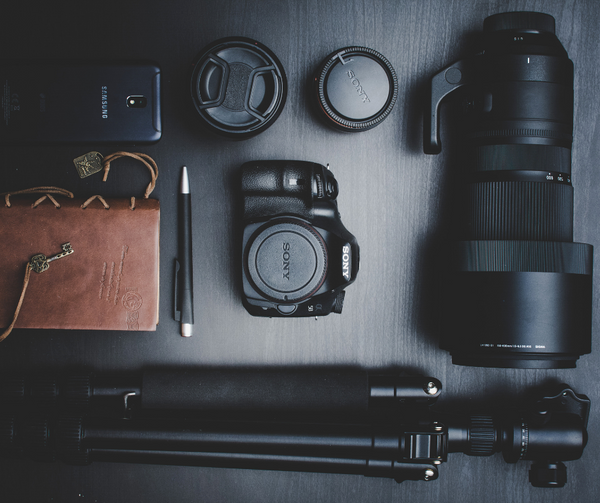
ane. You Need a Camera.
A camera is the absolute minimum tool required to get into this hobby. A DSLR is a good starting point. You can use different lenses to get close to the object y'all want while having full control over the capture process. The newer the camera, the better, as modern CMOS camera sensors have more than lite sensitivity and lower racket than cameras released 5-x years ago.
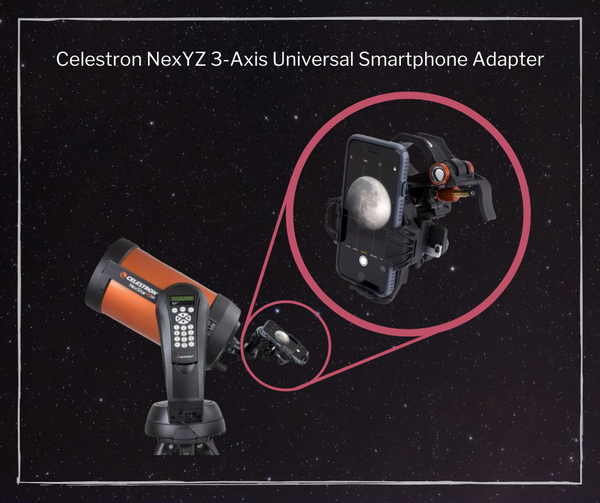
A quick and easy astrophotography tip is to utilise your smartphone as a bones camera! Telephone cameras have come a long way in their capturing abilities. An easy way to get a motion-picture show of the Moon is by placing your phone'south camera on the eyepiece. Endeavour it out!
An splendid accompaniment for using your smartphone is the Celestron NexYZ 3-Centrality Universal Smartphone Adapter . Attach it to your telescope, as shown below!
two. Attach a Lens.
The faster, the better. "Fast" is referring to a lens with a low focal ratio. The smaller that number is, the better information technology is at collecting calorie-free. Things in space are dim, then the more light the lens gathers, the clearer your images will be!
It's important to note that a lot of magnification isn't needed. A focal length of 135-350 mm is more than enough to see incredible nebulae and even a galaxy or 2. A telescope serves the same purpose every bit a lens, so but similar the lens, the faster the telescope's focal ratio, the improve.
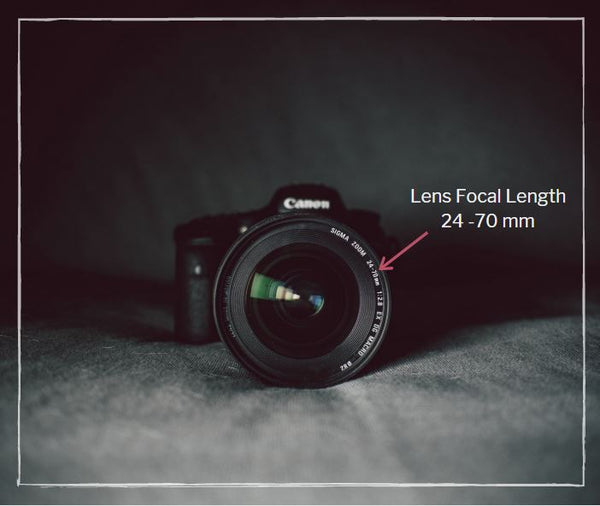
The discontinuity of a lens is important besides because the larger the discontinuity, the more light it can collect in less time.
3. Use a Tripod.
The tripod is an important foundation for any low-lite photography, especially for astrophotography, since the goal is to image from the darkest skies available to you. Any small shake or adventitious motility can ruin your image. A tripod will keep your camera steady for those long exposure images.
4. You Might Demand a Tracker.
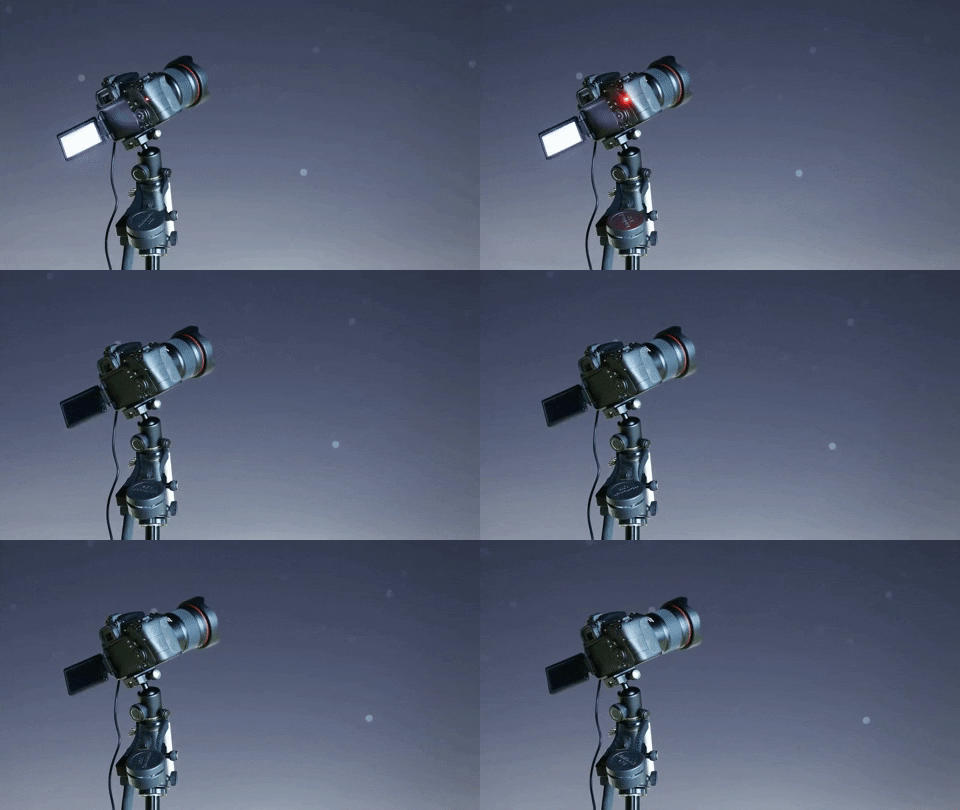
If you are using a long focal length, y'all might notice everything looks smeared when you lot take the pictures. That'south the Earth'southward motility moving your camera away from what you lot're trying to see.
A tracker spins the camera in the opposite direction to counteract with Earth's move. The ability to take long exposures is important considering information technology allows you lot to capture those faint details and structures in nebulae and galaxies.
If you're not using a tracker , y'all'll accept to take shorter exposures. For the intermediate photographers, the movement of Earth and the object you desire to capture limits what you tin can practise within the 500 Rule.
If you're curious, the 500 Rule is how much time you lot have to image earlier the stars beginning to streak and blur. To figure out your camera's maximum exposure fourth dimension, divide the number 500 by your lens' focal length.
For example, let's say your lens' focal length is 35 mm. 500 divided by 35 equals xiv.29, which would mean your maximum fourth dimension earlier getting blurry stars is 14.29 seconds.
5. Travel to dark skies.
With the equipment described, dark skies are pretty much required, but you can do at home without them. If you lot are near street lamps, y'all'll find pointing your camera at the sky and leaving the shutter open up for v seconds gives you a brighter heaven and maybe a couple of stars if you're lucky. With fancier gear, you can cut through the light pollution, but when keeping your equipment elementary, there is no substitute for getting out to the middle of nowhere to get away from light-polluted skies. Don't forget to practice it when the Moon is in a slim phase, or the moonlight itself will mess up your shots!
If yous have these 5 tools, you can take pictures of the Milky Way, galaxies, and nebulae. Yes, you can produce improve images with meliorate gear, only you could do quite a lot with a modest setup. You tin can learn to star hop to discover the objects you lot are looking for, or you can see with your naked eye if your skies are dark enough.
A skilful starting point is the Orion Nebula because it's the easiest to observe , and visible all wintertime from most latitudes.
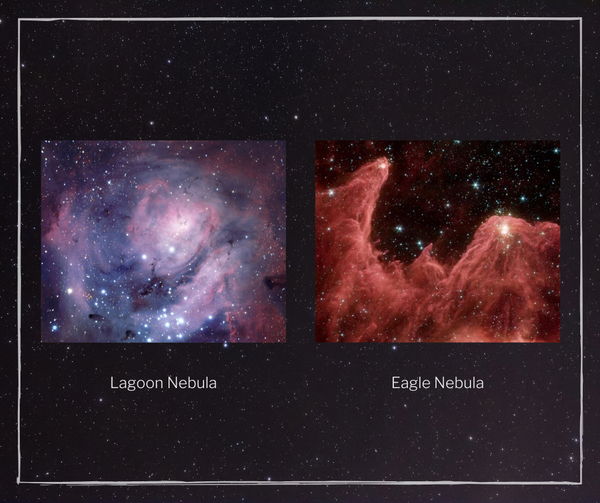
If you're trying this in the summertime, start with the Lagoon Nebula or Hawkeye Nebula. Both are bright and easy to notice.
In the next post , learn how to capture celestial objects successfully.
Source: https://optcorp.com/blogs/astrophotography-101/how-to-photograph-nebulae
Posted by: haleanybothe.blogspot.com
0 Response to "Which Telescope Can See Nebula With Direct Camera"
Post a Comment